How to Sell an Inherited House on Long Island Without Losing Money or Delaying Probate
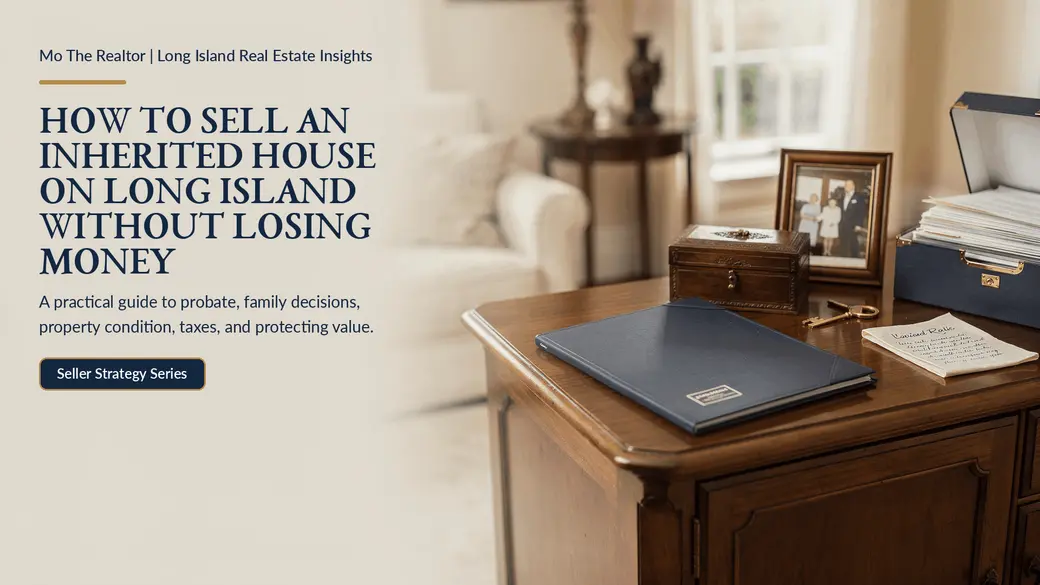
You inherited a house on Long Island. Now you are dealing with probate, family opinions, personal belongings, repairs, carrying costs, taxes, title questions, and pressure to decide whether to keep, rent, or sell.
This is not a normal home sale. The legal authority, timing, title, tax basis, condition, and family dynamics must be organised before the property is exposed to buyers.
Mo's quick answer: You may be able to sell an inherited Long Island house, but first confirm who has authority to sign, whether probate or administration is required, who legally owns the property, whether all necessary heirs or beneficiaries agree, and whether liens, occupants, permits, estate taxes, or title issues exist. Then compare selling as-is with cleaning, repairing, or preparing the home for a broader buyer pool.
Can You Sell an Inherited House in New York?
Yes, but the person signing the listing agreement and contract must have legal authority to do so.
If the deceased person left a will, the named executor generally petitions the Surrogate's Court for probate and court-issued authority. If there was no will, a qualified heir may petition for letters of administration.
Who Has the Right to Sell?
Executor
A person appointed under a will and authorised by the Surrogate's Court.
Administrator
A person appointed when there is no effective executor or no will.
Heirs or beneficiaries
People who may hold or receive an interest depending on the deed, will, intestacy law, and estate administration.
What If There Is No Will?
When someone dies without a will, New York treats the estate as intestate. A qualified distributee may petition the Surrogate's Court for letters of administration.
- All legal heirs must be identified
- Unknown or missing relatives can delay the proceeding
- Minor or incapacitated heirs may require additional protection
- The administrator's authority must be established before sale
- Family disagreement can delay pricing, clean-out, and contract decisions
Can a Small-Estate Proceeding Sell the House?
Do not assume so. New York's voluntary small-estate procedure is designed for qualifying personal property. Court guidance specifically warns that the resulting certificates are not used to sell or transfer real property such as a house, land, or condominium.
Do All Heirs Have to Agree?
Sometimes yes, sometimes no. It depends on who owns the property and who has authority to sell it.
- The executor may have authority under the will and New York law
- An administrator may need court approval
- Title may already be held by multiple heirs or beneficiaries
- All titled owners may need to sign
- A trust may own the property and require trustee action
- A surviving joint owner may have become owner outside probate
What If One Heir Refuses to Sell?
Possible solutions include a family buyout, independent appraisal, written settlement, court guidance, use of the fiduciary's lawful authority, or a partition action when private co-owners cannot agree.
The family disagreement that destroys value
One heir wants the highest price. Another wants an immediate cash sale. A third wants to keep the home but cannot buy out the others.
Months pass while taxes, insurance, utilities, landscaping, and repairs continue. The vacant home deteriorates, and the family eventually accepts less than an organised sale could have produced.
A realistic valuation and written decision process can stop emotion from becoming an expensive carrying cost.
Should You Sell the House As-Is?
Often, but not automatically. An as-is strategy may make sense when the home needs major work, the estate lacks renovation funds, heirs live out of state, the property is full of belongings, or permits and occupancy issues exist.
However, as-is should not mean unprepared. Strategic clean-out, safety corrections, landscaping, lighting, deep cleaning, and removal of obvious distractions can expand the buyer pool without creating a renovation project.
For municipal issues, read Can I Sell My Long Island House With Open Permits, No CO, or an Illegal Conversion?
Should You Renovate Before Selling?
Renovation value = expected price increase
minus project cost, carrying cost, delay, and execution risk
- Using estate money without authority
- Starting work before decision-makers agree
- Assuming renovation cost returns dollar for dollar
- Finding hidden permit or structural problems
- Managing contractors from another state
- Delaying the sale into a different market
Mortgage, Liens, and Closing Costs
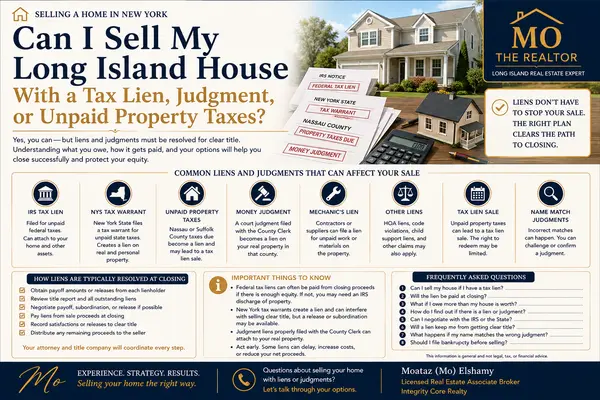
An inherited home may still have a mortgage, home-equity line, reverse mortgage, tax lien, judgment, municipal balance, estate claim, or other encumbrance.
- Mortgage and equity-line payoffs
- Property-tax and municipal arrears
- Judgments and liens
- Estate administration and attorney expenses
- Real estate professional fees
- New York transfer tax and closing expenses
How Is an Inherited House Sale Taxed?
Many heirs assume the entire sale price is taxable. Generally, gain is measured against the property's adjusted tax basis rather than treating the full price as gain.
Potential taxable gain = net sale proceeds
minus adjusted inherited-property basis
For inherited property, basis is often connected to fair market value at the date of death, subject to federal rules, estate-tax reporting, valuation elections, improvements, selling expenses, and other adjustments.
Can You Sell Before Probate Is Finished?
Sometimes. An authorised fiduciary may sell property while the estate remains open, but “probate started” is not the same as “authority to close.” Confirm the court letters, any restrictions, the will or statutory power, required approvals, title requirements, and interested parties.
What If Someone Still Lives There?
The occupant may be a tenant, month-to-month tenant, heir, caretaker, or person claiming a right to remain. Do not assume the fiduciary can simply change the locks.
For occupied-property strategy, read Can I Sell My Long Island House With Tenants Still Living There?
What If the House Is Full of Belongings?
- Secure the property and photograph every room.
- Locate the will, deed, financial records, keys, tax documents, and valuables.
- Identify specifically gifted items.
- Create a written family distribution plan.
- Separate documents, valuables, donations, saleable items, hazardous materials, and disposal.
- Use insured vendors and keep receipts for the estate accounting.
- Complete final cleaning and preparation before photography.
The Seven Biggest Mistakes
- Listing before legal authority is confirmed.
- Pricing from online estimates instead of condition and estate risk.
- Allowing one family member to make promises for everyone.
- Renovating without a net-proceeds analysis.
- Ignoring occupants, permits, or title defects.
- Distributing money before taxes, claims, and expenses are resolved.
- Waiting while carrying costs and deterioration accumulate.
Mo's Inherited-Property Pre-Listing Audit
- Confirm the deed and current ownership.
- Obtain the will, trust, death certificate, and court letters.
- Confirm who can list, contract, and close.
- Identify every heir, beneficiary, occupant, and interested party.
- Order title, lien, permit, CO, and municipal-record reviews.
- Document the mortgage, taxes, insurance, utilities, and carrying costs.
- Secure the property and address immediate risks.
- Obtain realistic as-is and prepared-sale values.
- Compare clean-out, repair, renovation, and delay costs.
- Obtain date-of-death valuation and tax guidance.
- Choose the buyer pool and sale strategy.
- Prepare estate documents before accepting an offer.
Frequently Asked Questions
Can I sell an inherited house before probate is complete?
Possibly. An authorised executor or administrator may be able to sell while the estate remains open, but the court letters, will, ownership, title requirements, and any necessary approval must support the transaction.
Can I sell an inherited house if there is no will?
Yes, but a qualified person may need letters of administration from the Surrogate's Court, and the legal heirs and authority to sell must be established.
Do all heirs have to agree to sell?
It depends on ownership and fiduciary authority. All titled owners may need to sign, while an executor or administrator may have separate authority subject to the will, law, court, and beneficiary rights.
What happens if one heir refuses to sell?
The family may negotiate a buyout or settlement, seek court guidance, rely on lawful fiduciary authority, or use a partition remedy when co-owners cannot agree.
Is the entire sale price taxable?
Generally, tax is based on gain rather than the full price. Gain may be calculated using net proceeds and the property's adjusted inherited basis. A tax professional should calculate the result.
Should I renovate before selling?
Only when the expected price increase is likely to exceed renovation, carrying, delay, and management costs. Many estates benefit more from targeted preparation.
Can I sell an inherited house with a mortgage?
Yes, if the estate or owners have authority and the mortgage and other liens can be paid or otherwise resolved at closing.
How do I determine the value?
Use a current market analysis for the sale strategy and qualified tax or appraisal guidance for the date-of-death value and inherited-property basis.
Mo's Bottom Line
Selling an inherited Long Island house is not only a pricing decision. You must confirm authority, title, estate obligations, occupants, condition, permits, taxes, and family decision-making before exposing the home to buyers.
The strongest strategy protects the estate from delay and unnecessary spending while reaching the best realistic buyer pool.
Inherited a House on Long Island?
Get a confidential inherited-property strategy covering value, condition, clean-out, buyer pool, permits, occupancy, projected proceeds, and the steps needed before listing.
Request Your Home EvaluationPlan Your MoveOfficial references: New York State Unified Court System probate, administration, and small-estate guidance; New York State Department of Taxation and Finance estate-tax and transfer-tax guidance; Internal Revenue Service inherited-property basis and reporting guidance.
This article provides general real estate information and is not legal, probate, estate-planning, tax, title, or appraisal advice. Authority, ownership, court approval, taxes, liens, distribution, and closing requirements depend on the deed, will, trust, court letters, estate, heirs, fiduciary, property, and facts. Consult qualified New York legal, tax, title, and appraisal professionals.
Categories
Recent Posts