

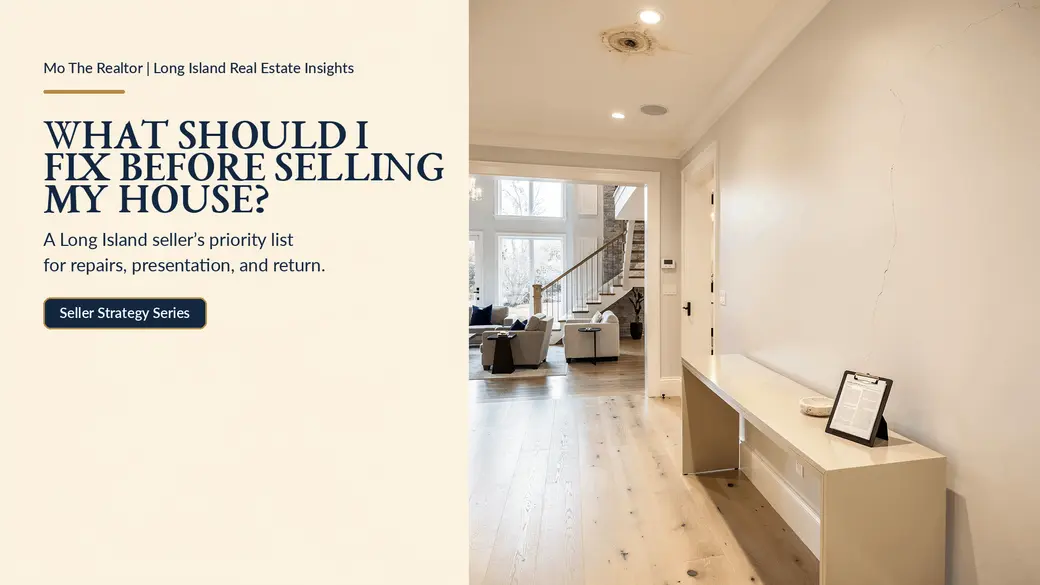
What Should I Fix Before Selling My House? A Long Island Seller's Priority List
If you are preparing to sell, the question is rarely whether the house could be improved. Almost every property could.
The important question is: Which improvements are most likely to protect the sale, improve buyer confidence, and justify the money?
I have seen sellers spend $40,000 on renovations that added little measurable value. I have also seen modest, well-chosen improvements completely change how buyers experienced a home.
The goal is not to fix everything. It is to fix the right things in the right order.
Mo's quick answer: Start with active problems, safety concerns, and conditions that could affect financing or inspections. Next, address defects buyers notice immediately. Only after that should you consider cosmetic upgrades.
Do You Have to Fix Everything Before Selling?
No. A home does not need to look brand new to sell successfully.
Many buyers can accept an older kitchen, dated bathroom, worn finishes, or cosmetic imperfections. They become more cautious when they see conditions suggesting water intrusion, unsafe systems, poor maintenance, or larger hidden problems.
The difference is not simply cosmetic versus non-cosmetic. The real distinction is between:
Conditions that threaten the transaction
Safety issues, active leaks, failed systems, visible moisture, or defects that may interfere with financing, insurance, inspections, or buyer confidence.
Conditions buyers can price and improve later
Dated finishes, older but functional features, ordinary wear, and cosmetic choices that do not prevent the home from being used safely.
The Long Island Seller's Four-Level Priority List
Active problems, safety, and financing risks
These conditions deserve attention first because they can create immediate concern or threaten the buyer's ability to close.
- Active roof or plumbing leaks
- Unresolved water intrusion or recurring basement moisture
- Unsafe electrical conditions
- Loose railings, broken steps, unstable decks, or serious trip hazards
- Failed heating, plumbing, or other essential systems
- Broken exterior doors, locks, or windows affecting security
- Visible mould or moisture-related growth that has not been properly evaluated
Defects that immediately reduce buyer confidence
These may not prevent a sale, but they can make buyers suspect that the property has been neglected.
- Large ceiling stains or obvious evidence of prior leaks
- Doors or windows that do not operate properly
- Peeling paint, visibly damaged trim, or loose fixtures
- Badly deteriorated flooring
- Heavy odours, excessive grime, or signs of poor maintenance
- Minor defects repeated throughout the home
High-impact presentation improvements
These are usually optional, but they often improve photographs, first impressions, and the emotional response during showings.
- Fresh neutral paint where walls are heavily marked or highly personalised
- Professional cleaning
- Decluttering and removing oversized furniture
- Improved lighting and replacement of visibly dated or damaged fixtures
- Refinishing salvageable hardwood
- Simple curb appeal, trimming, mulch, and pressure washing
Optional renovations and personal upgrades
These should be considered only when local comparable sales and buyer expectations clearly support the investment.
- Full kitchen or bathroom remodels
- Luxury fixtures and designer finishes
- Replacing functional windows throughout the home
- Custom built-ins or specialty rooms
- Major additions or finished-space projects
- Highly personalised design choices
What I Would Fix First
Water leaks and moisture
Few conditions damage buyer confidence faster than active water. Roof leaks, plumbing leaks, foundation moisture, and recurring basement water raise concerns about hidden damage, mould, rot, and future expense.
The objective is not always a full replacement. Sometimes a documented, professional repair is enough. What matters is addressing the active source rather than hiding the evidence.
Visible mould or unresolved moisture growth
Visible mould should not be ignored or simply covered. The underlying moisture source matters as much as the surface condition.
One seller had visible mould around a boiler area. We addressed it professionally before listing because the issue would have created fear, inspection concerns, and negotiating leverage for buyers.
Safety issues
Loose railings, broken steps, unsafe wiring, unstable exterior structures, and missing or non-functioning safety devices can create a disproportionate amount of concern compared with the cost of correcting them.
Broken windows, doors, and locks
A slightly fogged pane may be cosmetic. A window that will not open, a broken exterior lock, or a damaged door affecting security is different. Repair the condition that suggests poor maintenance or limits safe use.
Badly deteriorated flooring
Buyers notice flooring immediately because it runs through the entire visual field of a room. If flooring is peeling, broken, heavily stained, or clearly failing, it can make the whole property feel neglected.
For the legal and transaction-focused distinction, review What Repairs Are Required Before Selling a House?
Improvements That Often Produce a Stronger Return
Fresh paint
Paint can improve brightness, cleanliness, and visual consistency without requiring a major budget. It is most useful when walls are heavily marked, colours are highly specific, or wallpaper makes the rooms feel darker and smaller.
Glen Oaks: remove the distraction, not the kitchen
One seller had dated wallpaper that was hurting the presentation of the kitchen. We did not renovate the entire room.
We removed the wallpaper and used a clean, soft colour. The space immediately felt brighter, cleaner, and larger.
The improvement worked because it removed a strong visual objection without overspending.
Flooring
Replacing every floor is rarely necessary. However, badly deteriorated flooring can weaken the entire presentation. When hardwood can be refinished, restore it. When inexpensive flooring is visibly failing, a controlled replacement may be worthwhile.
Levittown: a controlled, visible transformation
One seller had inexpensive flooring that was peeling and falling apart. Rather than beginning a full renovation, we installed quality wood-look luxury vinyl, used fresh white paint, and painted the kitchen cabinets.
Buyers repeatedly commented on the improved presentation.
The spending was focused, visible, and aligned with the home's price range.
Strategic kitchen improvements
Not every kitchen needs a $60,000 renovation. Cabinet paint, new hardware, better lighting, selective countertop replacement, repairs, or a practical layout adjustment can create much of the emotional benefit at a fraction of the cost.
Bathroom refreshes
Bathrooms do not need to be luxurious. They need to feel clean, bright, functional, and well maintained.
Two bathrooms, two different recommendations
One North Babylon home had homemade plastic wall panels that weakened buyer confidence. Replacing them with tasteful finishes improved the room immediately.
Another property had an older pink bathroom, but the home was positioned as an investment opportunity and the bathroom was not threatening the sale. My advice was to leave it alone.
The same category of room can require completely different strategies.
What Usually Is Not Worth Spending Money On
- Luxury upgrades far beyond neighbourhood standards
- Designer finishes selected around personal taste
- Replacing functional features solely because they are older
- Custom rooms or built-ins that narrow the buyer pool
- Major renovation projects without clear comparable-sale support
- Expensive improvements buyers are likely to replace anyway
Use What Home Improvements Are a Waste of Money Before Selling? before approving any large project.
Do Not Forget Curb Appeal
Buyers begin forming an opinion before they enter the house. Curb appeal does not require elaborate landscaping or expensive hardscaping.
Simple improvements often make the strongest difference:
- Trim overgrown landscaping
- Remove debris and dead plants
- Add fresh mulch where appropriate
- Pressure wash dirty surfaces
- Clean the front door and entry area
- Repair obvious trip hazards or broken exterior fixtures
- Keep walkways and house numbers visible
Priority Table: Fix, Refresh, or Leave Alone?
| Condition | Typical priority | Likely strategy |
|---|---|---|
| Active leak, unsafe wiring, broken steps | High | Evaluate and address before listing |
| Visible mould or recurring moisture | High | Correct the source and use qualified professionals |
| Badly peeling flooring or damaged doors | Medium to high | Repair or replace selectively |
| Marked walls, dated wallpaper, poor lighting | Medium | Use a modest presentation refresh |
| Dated but functional kitchen or bathroom | Low to medium | Compare targeted updates with selling as is |
| Luxury remodel or custom feature | Low | Proceed only if local market evidence supports it |
The Biggest Mistake Sellers Make
The biggest mistake is spending based on emotion rather than priority.
Sellers often focus on the project they personally dislike while overlooking the condition buyers will notice first. That reverses the proper order.
The more money you spend before selling, the more money you will make.
Focused repairs and visible presentation improvements often outperform expensive renovations that do not solve a meaningful buyer objection.
Mo's Pre-Listing Repair Test
Before spending money, ask:
- Is the condition active, unsafe, or getting worse?
- Could it affect financing, insurance, inspection, or the buyer's ability to close?
- Will buyers interpret it as evidence of larger hidden problems?
- Is the issue immediately visible in photographs or during the first five minutes of a showing?
- Can a lower-cost repair or refresh produce most of the same benefit?
- Will the likely improvement in net proceeds justify the cost and delay?
My philosophy: Every house, neighbourhood, buyer pool, and price point is different. That is why I do not hand every seller the same generic checklist. The priority list should be based on buyer psychology, competition, cost, and expected return.
Frequently Asked Questions
What should I fix first before selling my house?
Start with active leaks, safety hazards, failed essential systems, serious moisture concerns, broken security features, and conditions that may affect financing or buyer confidence. Presentation improvements should come after the high-risk items.
Do I need to renovate my kitchen before selling?
Not automatically. A dated but functional kitchen may sell successfully in its current condition. Targeted improvements such as cleaning, cabinet paint, hardware, lighting, repairs, or a modest layout adjustment may provide a better return than a full renovation.
Is fresh paint worth it before listing?
It can be, especially when walls are heavily marked, wallpaper is dated, or colours are highly personalised. Paint is most effective when it improves brightness, cleanliness, and visual consistency.
Should I replace old flooring before selling?
Replace or repair flooring when it is visibly failing, badly damaged, unsafe, or hurting the overall presentation. Refinish salvageable hardwood when possible. Older but functional flooring may not require replacement.
Should I fix cosmetic issues before selling?
Focus on cosmetic issues that are highly visible, repeated throughout the home, or likely to make buyers assume the property has been neglected. Minor imperfections that do not affect first impressions may be left alone.
How much should I spend before selling?
There is no universal amount. The budget should depend on the home's value, current condition, likely buyer pool, competing listings, available cash, timeline, and the expected increase in net proceeds.
Should I renovate or sell as is?
Compare the likely net result of both strategies. Renovation may help when one focused project removes a major objection. Selling as is may be smarter when demand is already strong, the buyer will renovate anyway, or the cost and delay outweigh the likely return. Read Should I Renovate My House Before Selling or Sell It As Is?
Mo's Bottom Line
The goal is not to create the nicest house in the neighbourhood.
The goal is to remove the objections most likely to reduce demand, threaten the transaction, or weaken your negotiating position—without spending money buyers will not return.
Sometimes that means repairing. Sometimes it means painting. Sometimes it means selling exactly as the home is.
The smartest sellers do not ask only, "What can I fix?" They ask, "What should I fix first?"
Get a Repair Priority List for Your Home
I can help you separate urgent repairs, high-impact improvements, and unnecessary projects before you spend the money.
Get a Realistic Home Value Range Plan Your MoveThis article provides general real estate information for Long Island homeowners and is not legal, engineering, environmental, lending, insurance, appraisal, inspection, or contracting advice. Requirements, costs, and results vary by property, municipality, financing, market conditions, and transaction. Consult the appropriate licensed professionals regarding your specific circumstances.
Categories
Recent Posts