

Should I Remodel My Kitchen Before Selling, or Am I Wasting My Money?
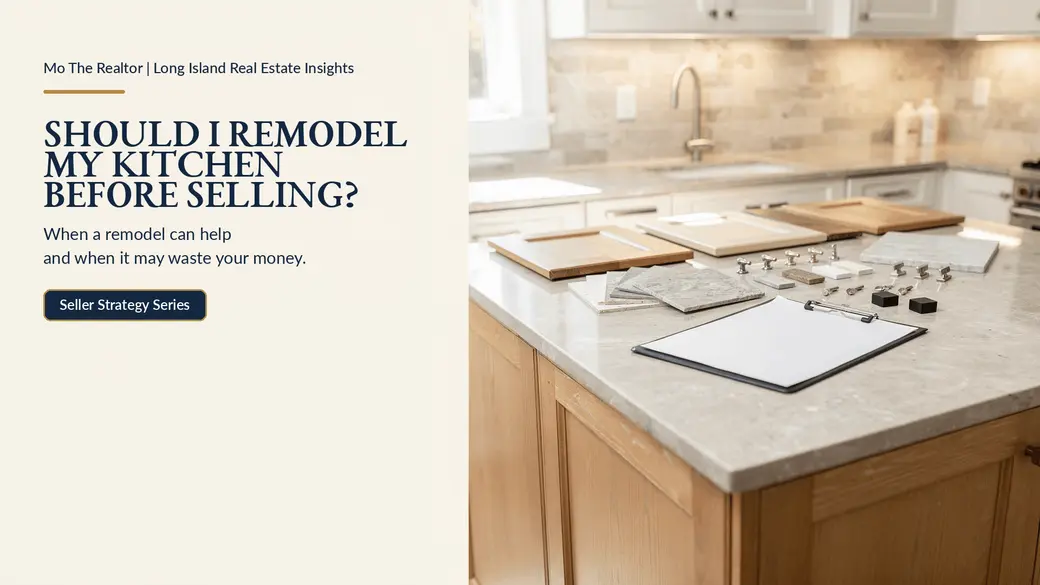
The kitchen is one of the most emotional rooms in a home, but that does not mean every seller should complete a full remodel before listing.
Some kitchens need strategic work because poor layout, weak lighting, dated finishes, or obvious wear are limiting buyer appeal. Others should be left alone because location, price, demand, and the home's overall value matter more than the cabinets.
The right decision is not based on whether the kitchen is old. It is based on whether buyers will care enough about the improvement to pay more for the home.
Mo's quick answer: Remodel when the kitchen creates a major buyer objection, lacks function, or falls materially below the home's price point. Choose a smaller refresh when cleaning, paint, hardware, lighting, counters, or one layout improvement can solve most of the problem. Skip the project when the cost and delay are unlikely to improve your net proceeds.
Should You Remodel Your Kitchen Before Selling?
Sometimes. But a full renovation is not automatically the best answer.
Buyers are purchasing the entire property: the location, school district, layout, lot, condition, taxes, price, and future potential. A beautiful kitchen can help, but it cannot correct every weakness or justify any price.
Remodel may make sense when
- The layout functions poorly
- Counter space is severely limited
- The kitchen is the home's strongest objection
- The room looks unfinished, damaged, or poorly installed
- Competing homes offer clearly stronger kitchens
- The project can be controlled without over-improving
Remodel may be a waste when
- The location and buyer demand are already strong
- The kitchen is dated but clean and functional
- The likely buyer will renovate to personal taste
- The project would delay a favourable listing window
- The budget would be better spent on higher-priority repairs
- The expected sale premium does not justify the cost
Buyers Do Not Require a Luxury Kitchen
Most buyers do not expect imported stone, designer cabinets, professional appliances, or magazine-level finishes in every home.
They usually respond first to whether the kitchen feels:
- Clean
- Bright
- Functional
- Comfortable
- Well maintained
- Practical for everyday use
When One Strategic Improvement Was Enough
A peninsula solved the real problem
One seller had an older kitchen that felt tight and awkward. The cabinets were usable and the appliances worked, but the room lacked function.
Rather than recommend a complete renovation, we added a large peninsula.
That single improvement created more counter space, a natural gathering area, better traffic flow, and a more modern appearance. The kitchen felt larger without adding square footage.
It helped the home command a stronger response while costing a fraction of a full remodel.
When the Best Remodel Was No Remodel
Strong location, dated kitchen, successful sale
Another couple considered completely renovating a dated kitchen before selling.
The property was in a highly desirable location with strong schools, good commuter access, a solid neighbourhood, and high buyer demand.
I advised them not to remodel. The work would have delayed the sale, cost tens of thousands of dollars, and possibly uncovered additional issues without being necessary.
We positioned the home correctly, priced it strategically, and marketed the kitchen honestly as an opportunity. The result was strong interest, multiple offers, and a successful sale.
Sometimes the location is the strongest renovation.
For the broader decision framework, read Should I Renovate My House Before Selling or Sell It As Is?
Full Remodel, Strategic Refresh, or Leave It Alone?
| Kitchen condition | Likely strategy | Why |
|---|---|---|
| Clean, dated, and functional | Leave alone or lightly refresh | Buyers can use it now and renovate later |
| Dark finishes, old hardware, poor lighting | Strategic refresh | Lower-cost improvements may transform perception |
| Severe lack of counter space | Targeted layout improvement | Function may matter more than luxury finishes |
| Damaged cabinets, failing surfaces, unfinished work | Controlled renovation | The condition may reduce confidence and demand |
| High-end remodel in a modest price range | Usually avoid | The market may not return the expense |
| Strong location and value-add buyer pool | Often sell as is | Location and opportunity may outweigh the dated kitchen |
High-Impact Kitchen Improvements That Cost Less
Deep cleaning and decluttering
Clear counters, clean appliances, bright surfaces, organised cabinets, and fewer personal items can make the room feel larger and more functional.
Paint
Removing dated wallpaper or painting dark walls can dramatically change the room without touching the cabinets or layout.
Cabinet refinishing or paint
When cabinets are structurally sound, refinishing, painting, or replacing hardware may improve the kitchen at far lower cost than full replacement.
Lighting
Updated fixtures, better bulb temperature, and stronger task lighting can make the kitchen feel cleaner, brighter, and more current.
Countertops
Selective countertop replacement may help when the existing surface is damaged, heavily dated, or visually dominating the room. The material should match the home's price point.
One functional improvement
A peninsula, island, additional storage, or improved traffic flow can sometimes create more value than decorative upgrades.
The Kitchen Mistake That Costs Sellers Thousands
A common mistake is spending heavily on cabinets, counters, and backsplash while leaving obviously worn appliances, poor lighting, damaged floors, or unfinished details.
The room then feels incomplete. Buyers focus on what was not done instead of appreciating what was improved.
Consistency matters: A modest kitchen with coherent finishes often feels more valuable than a partially luxurious kitchen with weak or unfinished details.
What Buyers Notice First
- Does the kitchen feel bright?
- Does it look and smell clean?
- Is there enough usable counter space?
- Does the layout make sense?
- Is there practical storage?
- Do the appliances appear functional and reasonably consistent?
- Can buyers picture themselves cooking and gathering there?
- Does the room feel maintained?
Do Not Renovate for Yourself
A seller preparing to move should not design a dream kitchen around personal taste. Highly specific colours, premium appliances, custom cabinet layouts, or luxury materials may not align with the next buyer's priorities.
The goal is broad appeal and better function—not creating a kitchen the seller would have chosen to enjoy for the next decade.
Before approving a large project, review What Home Improvements Are a Waste of Money Before Selling?
How to Decide Whether a Kitchen Remodel Will Pay Off
- Estimate the likely sale price and buyer response with the kitchen in its current condition.
- Identify the specific objection the remodel is meant to solve.
- Compare a full renovation with a targeted refresh or one functional improvement.
- Price labour, materials, appliances, permits where applicable, contingencies, and carrying costs.
- Consider whether the project will delay the listing or miss a strong market window.
- Compare the finished kitchen with neighbourhood standards and competing listings.
- Estimate the likely improvement in net proceeds, not only the possible sale price.
Mo's Kitchen Remodel Test
Before spending, ask:
- Is the kitchen merely dated, or does it function poorly?
- Will it be one of the strongest objections in photos and showings?
- Can cleaning, paint, hardware, lighting, or counters solve most of the problem?
- Would one layout improvement create more value than a full remodel?
- Does the project fit the likely buyer and price point?
- Will the work delay the sale or create additional risk?
- Would the same budget produce a stronger result elsewhere?
A full kitchen remodel always gives a seller the strongest return.
Thoughtful cosmetic improvements, better lighting, stronger function, and one strategic layout change may create a better return than an expensive luxury renovation.
Frequently Asked Questions
Should I remodel my kitchen before selling?
Remodel when the kitchen creates a major buyer objection, functions poorly, appears damaged or unfinished, or is materially below the standard expected at the home's price point. A dated but clean and functional kitchen may not need renovation.
Does a kitchen remodel increase home value?
It can improve buyer interest and perceived value, but sellers do not automatically recover every dollar spent. The result depends on the existing condition, project cost, quality, price point, local competition, timing, and buyer expectations.
What kitchen updates help most before selling?
Deep cleaning, decluttering, paint, cabinet refinishing, updated hardware, improved lighting, selective countertop replacement, and one functional layout improvement can create strong impact without a full remodel.
Should I paint kitchen cabinets before selling?
Painting may make sense when the cabinets are structurally sound but the colour or finish is hurting the presentation. Poorly prepared cabinet paint can look worse than the original finish, so workmanship matters.
Should I replace kitchen appliances before selling?
Replacement may help when appliances are damaged, unreliable, visibly inconsistent, or making an otherwise updated kitchen feel incomplete. Functional older appliances may be left when the buyer is likely to remodel.
Is it better to refresh or fully remodel a kitchen before selling?
A refresh is often safer when the kitchen is functional but visually tired. A full remodel is more appropriate when the layout is poor, surfaces are failing, or the room creates a major mismatch with the rest of the home.
Can I sell a house with a dated kitchen?
Yes. A dated kitchen does not prevent a successful sale when the home is priced appropriately, presented honestly, and marketed to the correct buyer pool. Strong location, demand, layout, and overall value may outweigh the dated finishes.
Mo's Bottom Line
Your kitchen can absolutely help sell your home, but it does not have to be perfect.
Sometimes a full remodel is justified. Sometimes a strategic refresh or one functional improvement produces the stronger return. Sometimes leaving the kitchen alone is the smartest decision.
The goal is not to spend the most. It is to spend where buyers actually see and feel the value.
Before You Remodel, Compare the Real Return
I can help you determine whether your kitchen needs a full remodel, a strategic refresh, one functional improvement, or no work at all before listing.
Get a Realistic Home Value Range Plan Your MoveThis article provides general real estate information for Long Island homeowners and is not legal, engineering, environmental, lending, insurance, appraisal, inspection, design, appliance, kitchen, or contracting advice. Costs, requirements, and results vary by property, layout, materials, municipality, financing, market conditions, and transaction. Consult the appropriate licensed professionals regarding your specific circumstances.
Categories
Recent Posts